
County Lines Workshops for Schools, Colleges, Parents and Staff Training
2020 Dreams County Lines Workshops help children, young people, parents and professionals understand how County Lines exploitation works, how criminal networks groom and control victims, the warning signs of child criminal exploitation (CCE), and how to seek help before a young person becomes more deeply trapped.
County Lines Workshops for Schools need to go beyond telling pupils that gangs sell drugs across county borders. County Lines is a safeguarding issue involving grooming, coercion, debt, violence, drugs, weapons, online recruitment, missing episodes, exploitation of vulnerable homes and, in some cases, sexual violence. A child may appear to be making choices while another person is deliberately creating the pressure, dependency or fear behind those choices.
Our County Lines Awareness Workshops use age-appropriate scenarios, safeguarding discussion, role-play and practical decision-making activities rather than graphic stories or scare tactics. Students examine how an apparently small favour, gift, friendship, lift, social-media message or opportunity to earn money can be turned into leverage and control.
The programme can be delivered as a standalone County Lines Workshop or combined with Gang Prevention, Knife Crime, Drugs, Peer Pressure, Online Grooming and Situational Awareness education. Dedicated County Lines Staff Training and parent sessions are also available for schools and organisations wanting a whole-setting response.
Core Features of Our County Lines Workshops
- Clear explanation of County Lines and child criminal exploitation
- Grooming, targeting, gifts, status, favours and manufactured debt
- Online recruitment through social media, messaging and peer networks
- County Lines slang and terminology explained without glamorising gang culture
- Deal lines, drug movement and the role of exploited young people
- Cuckooing and exploitation of vulnerable adults and homes
- Internal concealment explained as a serious form of coercion and harm
- Knife crime, violence, intimidation and fear of retaliation
- Sexual exploitation and violence that can overlap with criminal exploitation
- Missing episodes, travel and changes in school attendance
- Victim-first safeguarding and why a child cannot consent to being exploited
- Practical help-seeking and trusted-adult pathways
- County Lines Staff Training for teachers, DSLs, pastoral teams and professionals
- Parent and carer awareness sessions
The central message is that County Lines is exploitation. Young people may be carrying drugs, holding money, travelling, recruiting peers or following instructions, but professionals still need to ask who is benefiting, who has power and whether fear, coercion, debt or manipulation sits behind the behaviour.
What Is County Lines? A Clear Definition for Schools and Young People
County Lines describes gangs and organised criminal networks involved in exporting illegal drugs into one or more areas in the UK using a dedicated mobile phone line or other form of “deal line”. Children, young people and vulnerable adults may be exploited to move or store drugs, money and sometimes weapons.
County Lines does not always mean a child is physically taken across a county border. Government guidance recognises that some lines operate locally within the same town, city or county. The defining features are the drug-supply network, the deal line and the exploitation and control surrounding it.
Where a child is exploited into criminal activity, this is commonly described as child criminal exploitation. Exploitation can occur even when the activity appears consensual. A young person may believe they are earning money, helping friends or choosing to participate while an exploiter is deliberately taking advantage of an imbalance of power.
Our County Lines Workshops for Schools and Colleges make this distinction clear because pupils need to understand that asking for help is still possible even after they have carried something, accepted money, travelled, lied to adults or become involved in offending.
Why County Lines Workshops Are Essential in 2026
County Lines remains a significant safeguarding concern across the UK. The current Home Office County Lines Programme describes it as the most violent model of drug supply and a harmful form of child criminal exploitation, strongly linked with serious violence and knife crime.
Home Office estimates indicate that approximately 15,500 children were identified as at risk of, or involved in, child criminal exploitation in the year ending March 2025, while government reporting acknowledges that the true scale is likely to be higher.
Police data for 2024/25 recorded 2,659 children as involved in County Lines activity. Children represented around one fifth of individuals recorded as involved in County Lines, demonstrating why schools, colleges, youth services and safeguarding professionals remain central to prevention and early identification.
County Lines in Numbers: Latest 2026 Programme Data
Children identified at risk
Home Office estimate of children identified as at risk of or involved in child criminal exploitation in the year ending March 2025.
Children recorded in County Lines
Police data recorded 2,659 children as involved in County Lines activity during 2024/25.
County lines closed
Home Office-funded activity resulted in 4,556 line closures between July 2024 and March 2026.
Safeguarding referrals
At least 6,939 individuals were referred to safeguarding through County Lines Programme activity from July 2024 to March 2026.
During the same July 2024 to March 2026 period, the County Lines Programme recorded 12,697 arrests, at least 2,821 line holders charged and 1,900 knives seized. These are enforcement and safeguarding outcomes from programme-funded activity rather than an estimate of every County Lines network operating in the UK.
What Students Learn in County Lines Workshops
Understand how attention, friendship, money, gifts, status and small favours can be used to build trust before demands increase.
Identify debt, threats, violence, secrecy, isolation and fear as signs that an apparent opportunity has become exploitation.
Examine what happens when fast money, trainers, lifts or free products come with hidden expectations and future obligations.
Learn that criminal activity does not automatically remove a child’s need for safeguarding and that exploited children cannot consent to their exploitation.
Recognise why exploiters benefit when a young person becomes isolated from family, school and trusted adults.
Understand that it is never “too late” to tell a trusted adult, DSL, parent, youth worker or safeguarding professional what is happening.
Gift, Favour or Grooming? The County Lines Recruitment Lab
One of the unique elements in our County Lines Workshops is the Gift, Favour or Grooming? Recruitment Lab. Students examine situations where exploitation is deliberately disguised as friendship, generosity or opportunity.
The Free Trainers
An older person buys a young person expensive trainers and says there is no need to repay them.
Decision point: What changes if a favour is requested later and the gift is suddenly described as a debt?
The “Easy Job”
A friend says somebody can make quick money simply by carrying a package to another area.
Decision point: Who knows what is in the package, who takes the legal and physical risk, and who keeps most of the profit?
The Social-Media Message
A young person receives messages offering cash, products and a lifestyle that appears more exciting than school.
Decision point: What information is being hidden behind the image of success?
The Loyalty Test
A young person is told that refusing a task means they are disloyal or weak.
Decision point: Is this friendship, peer pressure or somebody testing how much control they have?
The Recruitment Lab helps pupils understand that grooming is often easiest to recognise after it has escalated. The workshop therefore concentrates on earlier moments where pressure, secrecy and dependency first begin to appear.
The County Lines Exploitation Ladder: TARGET → TRUST → TASK → DEBT → CONTROL
County Lines grooming does not follow one identical sequence, but common patterns can help pupils and professionals understand how exploitation may intensify. Our County Lines Exploitation Ladder is used as an educational model rather than a claim that every victim follows the same route.
TARGET
An exploiter notices a need, vulnerability, friendship group, aspiration or opportunity.
TRUST
Attention, friendship, gifts, status or protection make the relationship feel valuable.
TASK
A small favour creates involvement and tests whether the young person will follow instructions.
DEBT
Money, drugs, lost property or earlier “gifts” may be turned into real or manufactured debt.
CONTROL
Threats, fear, violence, isolation or consequences make leaving feel dangerous or impossible.
The ladder is not inevitable. Early safeguarding, strong relationships, trusted adults and specialist support can interrupt exploitation at any stage.
The 5M County Lines Safeguarding Check: MONEY, MOVEMENT, MOBILE, MATES, MOOD
For staff and parents, our 5M County Lines Safeguarding Check provides a memorable way of noticing clusters of change. No single sign proves County Lines involvement and indicators must always be considered in context.
Consider sudden access to items that cannot easily be explained by ordinary income or family circumstances.
Look for changes in attendance, overnight absence or being found in areas where the young person has no obvious connection.
Multiple phones, constant calls, secrecy or anxiety around messages can be relevant when combined with other concerns.
A change of friendship group is not automatically suspicious, but power differences, secrecy and fear deserve professional curiosity.
Exploitation can show up emotionally before a young person feels able to explain what is happening.
The 5M Check is not a diagnostic tool. It is designed to help adults notice change, ask better questions and share concerns through safeguarding channels rather than assume guilt.
What Our County Lines Workshops Cover
Every County Lines Workshop is adapted around the setting, age group, local safeguarding picture and the school’s existing knowledge. The following themes can be delivered as one comprehensive programme or selected for deeper focus.
County Lines Grooming and Recruitment
Grooming can be slow, relational and difficult to recognise. Exploiters may offer something the young person genuinely values before revealing what is expected in return.
🔹 Friendship and belonging
🔹 Gifts, money and status
🔹 Lifts, food, vapes or clothing
🔹 Small favours becoming larger tasks
🔹 Loyalty tests
🔹 Secrecy
🔹 Debt and threats
🔹 Why grooming can look consensual from the outside
For a deeper programme on grooming methods across different forms of exploitation, see our Online Grooming Workshops.
Online County Lines Recruitment and Social Media
County Lines recruitment is not restricted to streets, parks or face-to-face contact. Government guidance recognises that grooming can happen online, and young people may encounter recruitment through messaging, social media and peer networks.
🔹 Lifestyle imagery and “easy money”
🔹 Direct messages
🔹 Peer-to-peer introductions
🔹 Seemingly legitimate “jobs”
🔹 Moving conversations into private channels
🔹 Pressure to keep activity secret
🔹 Why screenshots and online evidence may matter to safeguarding professionals
🔹 Blocking, reporting and telling a trusted adult where safe to do so
Debt Bondage and Manufactured Debt
Debt is one of the most powerful control mechanisms discussed in County Lines Awareness Workshops. A young person may be told they owe money because drugs were lost, stolen or seized, because a task went wrong, or because earlier gifts are suddenly treated as something that must be repaid.
🔹 Real and fabricated debt
🔹 Threats against the young person
🔹 Threats involving family or friends
🔹 Working to repay a debt that keeps increasing
🔹 Fear of police or school consequences
🔹 Why debt does not remove a child’s right to protection
Cuckooing and Home Takeover
Cuckooing describes criminals taking control of another person’s home to use it for illegal activity. County Lines networks may target adults who are isolated, have substance dependencies, physical or mental health needs, learning disabilities or other vulnerabilities.
🔹 Unexplained visitors at unusual times
🔹 The resident appearing frightened or controlled
🔹 Increased anti-social behaviour around a property
🔹 People using the address who do not normally live there
🔹 Children or vulnerable adults being drawn into activity around the property
🔹 Recognising the resident as a potential victim rather than assuming willing participation
The Crime and Policing Act 2026 creates a specific cuckooing offence as part of new measures addressing exploitation. Some provisions of the Act require commencement regulations, so our training distinguishes between legislation that has been enacted and provisions that are already operational.
Internal Concealment and Coercion
Internal concealment is a particularly serious form of exploitation where somebody is caused or compelled to conceal an item within their body for a criminal purpose. The practice can cause severe physical and psychological harm.
Our County Lines Workshops do not teach concealment methods or give operational detail. Students are taught that coercing somebody into this practice is abuse and that immediate safeguarding and medical concerns may arise.
The Crime and Policing Act 2026 also contains new offences addressing internal concealment for criminal purposes.
County Lines, Drugs and Deal Lines
County Lines remains fundamentally connected with illegal drug supply. Students learn enough to understand the business model without being taught how to operate it.
🔹 Dedicated deal lines
🔹 Moving drugs and money
🔹 Exploited “runners” or workforce roles
🔹 Class A drug markets
🔹 Profit flowing upwards while risk is pushed downwards
🔹 Unknown packages and criminal responsibility
🔹 Why a child carrying drugs may simultaneously be a victim of exploitation
For broader substance education, see our Drugs Workshops.
County Lines, Knife Crime and Violence
County Lines gangs can use violence, intimidation and weapons to maintain control. Young people may carry knives because they feel threatened, fear robbery or believe a weapon offers protection.
🔹 Fear-based weapon carrying
🔹 Retaliation
🔹 Robbery and drug debt
🔹 Rival groups
🔹 Violence used to enforce control
🔹 Why carrying a weapon can increase rather than remove danger
🔹 Safer alternatives and trusted-adult intervention
Schools can combine County Lines delivery with our Knife Crime Workshops.
County Lines, Gangs and Belonging
Not every County Lines network looks like a stereotypical street gang, but gang culture, hierarchy, status and group belonging can overlap with exploitation. Workshops explore the difference between genuine belonging and a relationship where loyalty only works in one direction.
🔹 Status and reputation
🔹 Older and younger members
🔹 Proving loyalty
🔹 Group identity
🔹 Retaliation and fear
🔹 Recruiting friends
🔹 Leaving and the need for safeguarding support
For a dedicated programme, see our Gang Workshops.
Peer Pressure, Loyalty and Refusal Skills
Direct threats are not always the first form of pressure. A young person may initially be influenced by a friend, somebody they admire or a group they want to belong to.
🔹 “Everyone does it”
🔹 “Just hold this”
🔹 “It’s only one trip”
🔹 “Don’t be scared”
🔹 “You owe me”
🔹 Protecting dignity when refusing
🔹 Leaving situations before pressure increases
This can be combined with our Peer Pressure Workshops.
County Lines, Sexual Exploitation and Violence Against Girls and Women
Criminal exploitation can overlap with sexual exploitation and sexual violence. The Home Office describes County Lines as involving coercion and intimidation that can include sexual violence, and current government reporting links the model with violence against women and girls.
🔹 Sexual pressure used as control
🔹 Exploitation within criminal networks
🔹 Threats involving intimate information or relationships
🔹 Gendered assumptions that can cause girls to be overlooked
🔹 Recognising overlapping forms of exploitation
🔹 Trauma-informed safeguarding responses
Missing Episodes, Travel and School Attendance
Changes in attendance can be an important safeguarding signal. Home Office guidance includes going missing from home or school, unexplained travel and being found in areas with no obvious connection among potential indicators of County Lines exploitation.
🔹 Repeated truancy
🔹 Overnight absence
🔹 Unexplained train or bus travel
🔹 Fatigue after missing episodes
🔹 Deterioration in attainment
🔹 Exclusion or disengagement
🔹 Asking what may sit behind behaviour rather than focusing only on punishment
Victim First: When a Child Appears to Be an Offender
A child cannot consent to their own exploitation.
Government guidance makes clear that children who are groomed into criminal activity may not recognise themselves as victims. Their actions may appear voluntary, particularly to adults seeing only the offending behaviour.
A victim-first approach does not mean ignoring harmful behaviour. It means understanding the exploitation, trauma, coercion and power imbalance behind it so safeguarding and accountability are handled appropriately.
The 2020 Dreams CONNECT Safeguarding Framework
The CONNECT Framework gives young people a simple message when they or a friend may be caught in County Lines exploitation. It is deliberately focused on connection and support rather than expecting a child to confront an exploiter alone.
Exploitation becomes easier when somebody is isolated. Keep contact with trusted family, staff, friends or professionals where it is safe to do so.
You do not need to wait until you can prove every detail or until the situation becomes an emergency.
Explaining who is pressuring you, what they are demanding and what you fear can help safeguarding professionals understand the risk.
Leaving exploitation can require coordinated safeguarding and professional support. A child should not be expected to solve the situation alone.
Carrying, storing, travelling or accepting money does not mean you have lost the right to protection and support.
County Lines Workshop Overview
County Lines, KCSIE 2026, RSHE and the Crime and Policing Act 2026
County Lines is a safeguarding issue. Keeping Children Safe in Education 2025 remains in force until 31 August 2026, with KCSIE 2026 coming into force on 1 September 2026. Schools and colleges should continue to respond to suspected exploitation through their established safeguarding arrangements.
The revised statutory Relationships, Sex and Health Education guidance for introduction on 1 September 2026 specifically identifies criminal exploitation, including gang involvement and County Lines drug operations, among the legal and safeguarding issues that secondary pupils should understand.
The Crime and Policing Act 2026 creates new measures addressing child criminal exploitation, cuckooing and internal concealment. The Act includes a standalone child criminal exploitation offence aimed at adults who intentionally cause children to commit criminal offences, alongside CCE prevention orders.
Some provisions in Part 4 of the Act require commencement regulations before taking practical effect. Our staff training therefore distinguishes carefully between legislation that has received Royal Assent and provisions that have already commenced.
Workshop role: an external County Lines Workshop can strengthen awareness, curriculum and staff confidence but does not replace DSL decision making, safeguarding referrals, local multi-agency arrangements or statutory responsibilities.

County Lines Staff Training for Schools and Professionals
County Lines Staff Training is available for teachers, DSLs, pastoral teams, heads, colleges, youth workers, social-care teams and organisations working with children or vulnerable adults.
Staff training can cover:
🔹 Current County Lines definition and business model
🔹 Child criminal exploitation and victim-first safeguarding
🔹 The 5M Safeguarding Check
🔹 Missing episodes and attendance changes
🔹 Gifts, debt, grooming and coercive control
🔹 Online recruitment
🔹 Cuckooing and home takeover
🔹 Internal concealment and safeguarding
🔹 Knife crime, violence and sexual exploitation
🔹 New Crime and Policing Act 2026 measures
🔹 KCSIE 2026 and safeguarding procedures
🔹 Referral routes and multi-agency working
🔹 Responding without criminalising an exploited child
Training can be delivered as a standalone CPD/INSET session or incorporated into a wider Staff Training programme.
County Lines Workshops for Parents and Carers
Parents and carers are often among the first people to notice that something has changed, but County Lines can be difficult to discuss without turning every new friendship, phone or change in mood into an accusation.
Our County Lines Parent Workshops focus on practical awareness:
🔹 Understanding County Lines and CCE
🔹 Recognising clusters of warning signs
🔹 Money, travel, phones, new associates and mood changes
🔹 How grooming can look like friendship
🔹 Online recruitment
🔹 Having conversations without immediate confrontation
🔹 What to do when a child denies exploitation
🔹 Working with the school or DSL
🔹 When urgent police or safeguarding support may be necessary
The emphasis is on maintaining communication. Exploiters benefit when a child believes adults will only punish, blame or refuse to understand them.
County Lines Workshops by Age Group
County Lines Workshops for Upper Primary, Years 5–6
Primary delivery focuses on safe and unsafe friendships, tricky or manipulative behaviour, gifts with hidden expectations, keeping safe online, pressure, secrets and telling a trusted adult.
Aims: early resilience without unnecessary detail about drugs, violence or criminal operations.
County Lines Workshops for Secondary Schools, KS3 and KS4
Secondary sessions explore County Lines, CCE, grooming, debt, drugs, deal lines, online recruitment, cuckooing, missing episodes, knife crime, gangs and help-seeking.
Aims: recognition of exploitation, stronger decision making, reduced vulnerability and confidence speaking to trusted adults.
County Lines Workshops for Sixth Forms and Colleges
Post-16 content can examine legal responsibility, adult transition, drug markets, money, exploitation, sexual violence, criminal networks, driving, accommodation and how victimhood may become harder to recognise around age 18.
Aims: mature safeguarding awareness, informed choices, bystander responsibility and early help.
County Lines Workshops for Universities and Adult Learners
University and adult sessions can explore County Lines within accommodation, student vulnerability, drug supply, cuckooing, exploitation, professional responsibilities and community safeguarding.
Aims: recognising exploitation beyond school age and understanding appropriate referral and support routes.
County Lines Workshops for SEND, SEMH, PRUs and Alternative Provision
County Lines Workshops can be adapted for SEND, SEMH, PRUs and alternative provision through smaller groups, visual prompts, clearer language, repetition, structured scenarios and more time to explore relationships and pressure.
Additional needs should never be treated as a prediction that a young person will become involved in exploitation. However, some learners may benefit from explicit teaching about false friendship, gifts, debt, secrecy, online contact, unsafe travel and how to identify a trusted adult.
Where a setting is already managing a live safeguarding concern, content can be planned carefully with the DSL so the workshop does not identify an individual pupil or interfere with ongoing safeguarding or police work.
Safeguarding Outcomes from County Lines Workshops
Students and staff gain clearer language for identifying gifts, debt, coercion, unusual travel and changing relationships.
Challenges the idea that a child carrying drugs or money has automatically chosen exploitation freely.
Pupils learn that asking for support remains possible even after they have accepted money, completed tasks or become frightened of consequences.
Shows how recruitment can begin through social media, messages and apparently legitimate opportunities.
Links County Lines with gangs, drugs, knife crime, peer pressure, online grooming, relationships and personal safety.
Student workshops can be combined with staff and parent sessions to improve consistency around recognition and response.
How We Deliver County Lines Workshops
Students analyse realistic offers, relationships and pressure without being shown graphic exploitation material.
TARGET → TRUST → TASK → DEBT → CONTROL helps pupils recognise how an apparently positive relationship can change.
MONEY → MOVEMENT → MOBILE → MATES → MOOD gives staff and parents a memorable way to notice clusters of change.
The help-seeking framework reinforces connection, disclosure and professional support rather than asking children to confront exploiters alone.
The workshop can discuss serious exploitation without relying on graphic images or humiliating pupils with lived experience.
Content can reflect local safeguarding concerns while avoiding operational details that could glamorise or teach criminal methods.
Face-to-face delivery is available across the UK with virtual programmes for UK and international organisations.
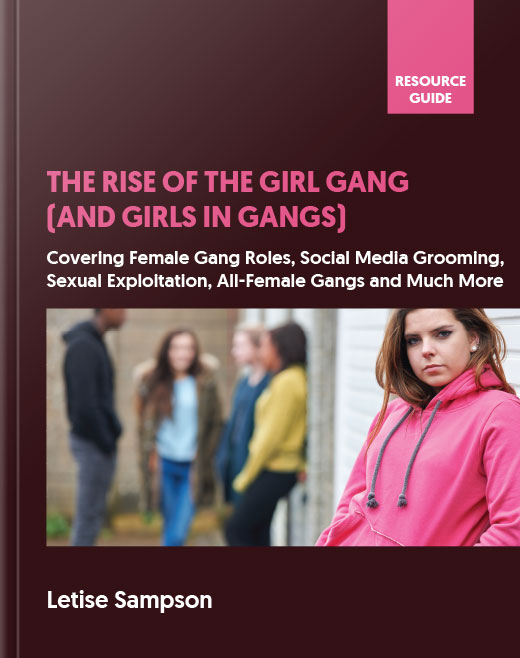
Supporting Resource: Getting to Grips with Gangs
Getting to Grips with Gangs by Letise Sampson can support follow-up learning around gangs, County Lines, exploitation, social media, peer pressure, violence and routes away from harmful involvement.
The resource provides additional discussion material for educators and professionals wanting to extend learning beyond a one-off County Lines Workshop.




Related County Lines, Gang and Safeguarding Workshops
County Lines overlaps with several areas of safeguarding. Internal links below help schools build a joined-up programme rather than treating criminal exploitation as a standalone topic.
Gang Workshops
Gang recruitment, belonging, status, exploitation, violence, social media and safer alternatives.
Knife Crime Workshops
Fear, weapon carrying, social media escalation, consequences, situational awareness and safer choices.
Drugs Workshops
Drugs, alcohol, ketamine, cannabis, cocaine, nitrous oxide, law, dependency and peer pressure.
Online Grooming Workshops
Trust building, manipulation, secrecy, digital contact, exploitation and safe reporting.
Peer Pressure Workshops
Belonging, group influence, manipulation, refusal skills and maintaining personal boundaries.
Situational Awareness Workshops
Personal safety, observation, risk awareness, travel, digital distraction and decision making.
County Lines Workshops FAQ
Book County Lines Workshops for Your School, College or Organisation
Bring County Lines Workshops to your school, college, university, youth service or organisation. Tell us the age group, number of participants, location, preferred dates and the County Lines or child criminal exploitation concerns you would most like the programme to address.
We can deliver standalone pupil workshops, targeted groups, parent awareness, County Lines Staff Training or a wider safeguarding programme combining County Lines with Gang Prevention, Knife Crime, Drugs, Peer Pressure, Online Grooming and Situational Awareness.
County Lines, Child Criminal Exploitation and Safeguarding References
Our County Lines Workshops draw on current government safeguarding guidance, legislation and County Lines Programme data:
- Home Office – County Lines Programme Overview – current definition, programme activity, investment and 2026 outcomes.
- Home Office – County Lines Programme Data, updated 10 July 2026 – line closures, arrests, charges, safeguarding referrals, knife seizures and specialist support.
- Home Office – Criminal Exploitation of Children and Vulnerable Adults: County Lines – practitioner guidance on definitions, vulnerability, signs and safeguarding responses.
- Home Office – Crime and Policing Act 2026: Child Criminal Exploitation, Cuckooing and Internal Concealment Factsheet – new legal measures and current CCE statistics.
- Crime and Policing Act 2026 – Commencement Notes – explains which provisions commence automatically and which require regulations.
- Department for Education – Keeping Children Safe in Education – KCSIE 2025 remains in force until 31 August 2026 and KCSIE 2026 comes into force on 1 September 2026.
- Department for Education – Relationships and Sex Education: Secondary – includes criminal exploitation through gang involvement and County Lines among relevant legal and safeguarding issues.
- Home Office – Safeguarding Responses to County Lines and Youth Violence, 2026 – research highlighting trauma-informed, child-centred and whole-system safeguarding responses.
These sources support a victim-first, trauma-informed approach that recognises County Lines as both organised drug supply and exploitation. The purpose of education is to help young people recognise risk earlier, strengthen trusted relationships and make it easier to disclose concerns before control escalates