
Misogyny Workshops for Schools, Colleges, Universities and Staff Training
2020 Dreams Misogyny Workshops for Schools help pupils, students and professionals recognise, challenge and prevent sexist attitudes, harmful gender expectations, online misogyny, sexual harassment and behaviours that can undermine healthy relationships and safeguarding.
Misogyny does not always begin with extreme language or overt hatred. In education settings it can start with jokes, stereotypes, sexualised comments, controlling behaviour, dismissive attitudes towards girls, pressure on boys to prove masculinity, online influencer content or the normalisation of ideas that present women and girls as less deserving of respect.
Our Misogyny Workshops take a preventative approach. Participants explore how attitudes form, how peer culture and online environments can reinforce them, where behaviour crosses from opinion or banter into discrimination or safeguarding concern, and how respectful relationships and positive masculinity provide healthier alternatives.
The programme avoids shaming boys or treating masculinity itself as a problem. Instead, Misogyny Awareness Workshops create structured space for honest discussion about equality, identity, consent, power, accountability, social media, the manosphere, incel culture, pornography, AI-generated sexual imagery and the wider impact of violence against women and girls.
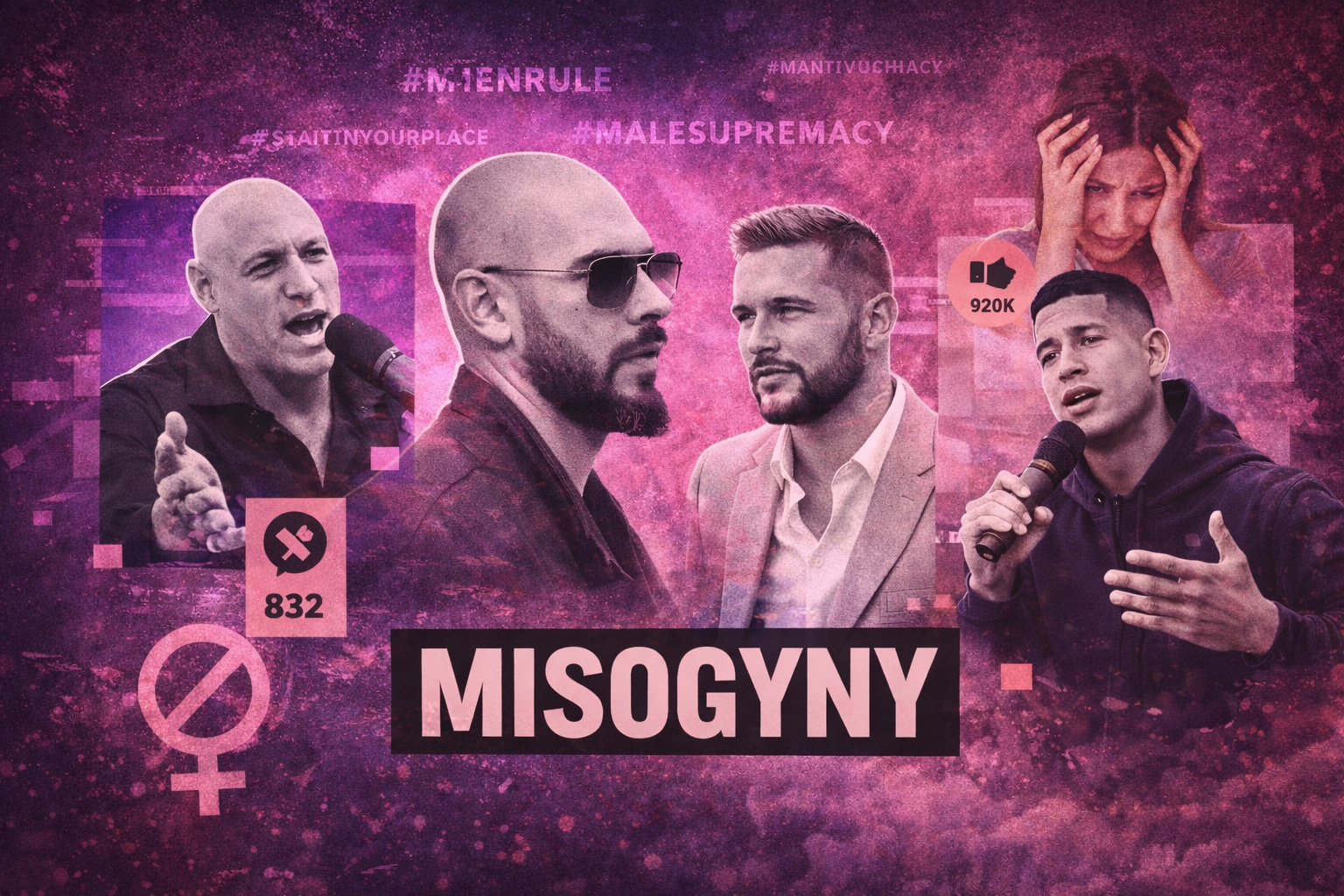
Core Features of Our Misogyny Workshops for Schools
- Age-appropriate explanation of misogyny, sexism, gender stereotypes and harmful attitudes
- Interactive scenarios drawn from classrooms, corridors, group chats, relationships and social media
- Critical exploration of misogynistic influencers, the manosphere, incel culture and online echo chambers
- Positive discussion of masculinity without stigmatising boys or young men
- Links between misogyny, pornography, sexual harassment, consent, coercive control and violence against women and girls
- Practical bystander strategies for challenging harmful language and supporting peers safely
- Digital literacy around algorithms, viral content, AI deepfakes and manipulated sexual imagery
- Staff training and whole-school support for responding consistently to misogyny-related concerns
Content is adapted by age and phase. Upper primary sessions focus on fairness, stereotypes, friendship and respectful behaviour. Secondary and post-16 programmes can examine online influence, sexual harassment, consent, pornography, coercive control, misogynistic subcultures and the responsibilities that come with increasing independence.
What Is Misogyny? Understanding Sexism, Gender Attitudes and Safeguarding
Misogyny refers to harmful attitudes, prejudice, contempt or discriminatory behaviour directed towards women and girls because of their sex or gender. It can appear through language, stereotypes, unequal expectations, harassment, entitlement, control or hostility.
Misogyny Workshops help young people recognise that misogyny exists on a spectrum. At one end may be apparently casual comments that reinforce stereotypes. At the more serious end can be sexual harassment, coercive control, abuse, threats and violence.
This does not mean every sexist joke inevitably leads to violence. The educational purpose is to understand how repeated attitudes and behaviours can contribute to a peer culture in which disrespect, entitlement or harassment becomes easier to excuse or overlook.
The workshop also distinguishes misogyny from healthy masculinity. Confidence, leadership, ambition, strength and male identity are not presented as harmful. The focus is on whether those qualities are built on respect and responsibility or on domination, humiliation and the devaluation of other people.
Why Schools Need Misogyny Workshops and Sexism Prevention Education
Schools and colleges are increasingly having to respond to attitudes that travel quickly between online spaces and everyday peer culture. A pupil may encounter a short video about confidence, dating, money or masculinity and then be recommended increasingly polarised material about gender, relationships and women.
Misogyny can also appear without any obvious connection to extremist online spaces. It may present through sexualised comments, humiliating girls in group chats, controlling behaviour in teenage relationships, hostility towards female staff, pressure around appearance, victim blaming or beliefs that consent is something to negotiate rather than respect.
Misogyny Workshops for Schools create an opportunity to address these issues before they become normalised. Participants learn the language to identify harmful behaviour, examine why certain narratives can be attractive and practise responding without turning the session into a confrontation between boys and girls.
Misogyny in Schools: What Current Evidence Shows
Current evidence supports a preventative but balanced approach. Department for Education pupil survey data published in 2026 showed that misogynistic comments remained a real feature of school life, while also recording improvement compared with earlier 2025 survey waves.
Key Stage 3 pupils
Said they had heard misogynistic comments from other pupils on at least some days in the previous week in the DfE December 2025 survey.
Key Stage 4 pupils
Reported hearing misogynistic comments on at least some days in the previous week.
Girls aged 11 to 21
Girlguiding’s 2025 survey found more than two thirds had changed everyday behaviour to try to avoid sexual harassment.
Girls aged 11 to 16
Reported intentionally missing school to reduce the risk of sexual harassment in Girlguiding’s 2025 research.
The same DfE survey found that 20% of Key Stage 3 pupils and 29% of Key Stage 4 pupils had heard comments from other pupils that made them worry about the safety of girls and women on at least some days in the previous week. These figures were lower than the March 2025 survey, showing why schools need both continued prevention and an evidence-based understanding of change over time.
Teacher research also shows the issue remains visible to staff. YouGov’s 2025 study found 45% of teachers regarded misogynistic attitudes and behaviour among boys at their own school as a problem, rising to 67% among secondary-school teachers.
What Students Learn in Misogyny Workshops
Identify stereotypes, sexualised comments, unequal expectations, harassment and behaviours that can be disguised as humour or normal peer culture.
Understand how social media influencers, recommendation systems and online communities can reinforce increasingly hostile views about gender and relationships.
Explore confidence, responsibility, emotional strength, respect and identity without relying on domination, humiliation or rigid gender expectations.
Recognise entitlement, pressure, coercion, controlling behaviour and the importance of respecting boundaries in relationships and online interactions.
Practise realistic bystander responses when friends make sexist comments, share harmful content or behave in ways that make others feel unsafe.
Understand when misogynistic behaviour moves beyond disagreement or poor judgement and becomes harassment, abuse, exploitation or a safeguarding concern.
Banter, Bias or Safeguarding Concern? Misogyny Scenario Lab
A distinctive feature of our Misogyny Workshops is the Scenario Lab. Pupils work through realistic situations where the line between humour, peer pressure, prejudice and safeguarding harm is not always immediately obvious.
“It Was Only a Joke”
A sexist comment is repeated in class and several pupils laugh. The person targeted looks uncomfortable but says nothing.
Workshop question: Does intention matter more than impact, and what could a bystander do without escalating the situation?
The Influencer Clip
A popular video says that successful relationships require men to be dominant and women to accept different rules.
Workshop question: What makes the message persuasive, what assumptions is it making and who benefits from those assumptions?
The Group Chat
A sexualised image, rumour or humiliating comment about a girl is being shared in a friendship group and nobody wants to be the person who objects.
Workshop question: What responsibility do people have when they did not create the content but are helping it spread?
The Controlling Relationship
One partner expects passwords, constant location updates and immediate replies and describes jealousy as proof of love.
Workshop question: Where is the difference between care, insecurity, pressure and control?
The Scenario Lab moves the conversation away from abstract definitions. Young people practise recognising power, impact, consent, peer influence and safer intervention in situations they can understand and discuss.
What Our Misogyny Workshops Cover
Every Misogyny Workshop is tailored to the age group, setting and safeguarding priorities of the organisation. Sessions can provide broad misogyny awareness or focus more deeply on a specific issue such as the manosphere, incel culture, pornography, consent, toxic masculinity, online radicalisation, sexual harassment or healthy relationships.
Recognising Misogyny, Sexism and Everyday Gender Bias
Participants begin with practical examples that help distinguish disagreement, humour and individual preference from patterns that devalue or discriminate against women and girls.
🔹 Sexist jokes and language
🔹 Gender stereotypes and unequal expectations
🔹 Sexualised comments
🔹 Dismissive behaviour towards girls or female staff
🔹 Objectification and appearance-based judgement
🔹 Victim blaming
🔹 Entitlement and double standards
🔹 Recognising when behaviour becomes a safeguarding concern
Misogynistic Influencers, the Manosphere and Online Gender Narratives
Online content about dating, status, wealth, fitness or confidence can sometimes lead into increasingly rigid or hostile ideas about women and relationships. Workshops examine the messages rather than turning individual personalities into the focus.
🔹 Misogynistic influencer culture
🔹 The manosphere and associated online communities
🔹 Algorithms and recommendation systems
🔹 Masculinity as a marketing tool
🔹 Relationship myths and gender hierarchies
🔹 Emotional hooks including insecurity, rejection and status
🔹 Critical thinking before adopting or sharing a claim
Schools requiring greater depth can combine this programme with our Manosphere Workshops.
Incel Culture, Online Communities and Radicalisation Pathways
The revised 2026 RSHE guidance places new emphasis on helping secondary pupils understand incel culture and harmful online influences. Our workshops explain the issue without suggesting that loneliness, rejection or male frustration automatically leads to extremism.
🔹 What “incel” means in online culture
🔹 Grievance and identity
🔹 Blaming women for personal difficulties
🔹 Dehumanising language
🔹 Online communities that reinforce hostility
🔹 Escalation from frustration to harmful ideology
🔹 Positive routes for connection, confidence and support
Toxic Masculinity and Positive Masculinity Workshops
Misogyny Workshops explore the pressures boys can experience to suppress emotion, dominate others, avoid vulnerability or prove status. The purpose is not to criticise masculinity but to broaden the range of ways boys and young men can understand strength.
🔹 Pressure to “man up”
🔹 Emotional suppression
🔹 Aggression as proof of strength
🔹 Status and sexual reputation
🔹 Fear of appearing weak
🔹 Confidence without domination
🔹 Accountability, empathy and leadership
For a dedicated programme, see our Toxic Masculinity Workshops.
Pornography, Sexual Expectations and Misogyny
Where age appropriate, workshops can examine how pornography and sexualised online content may influence ideas about bodies, sex, power, consent and what people believe partners should accept.
🔹 Pornography versus real relationships
🔹 Consent and unrealistic expectations
🔹 Objectification and sexual entitlement
🔹 Performance pressure
🔹 Aggression and gendered scripts
🔹 Critical media literacy
🔹 Respectful sexual ethics and communication
This content can be combined with our Pornography Workshops.
Consent, Entitlement and Healthy Relationships
Misogyny can influence relationships when one person believes they are entitled to another person’s attention, body, passwords, location or compliance. Workshops connect respect to practical relationship behaviour.
🔹 Ongoing consent
🔹 Pressure and coercion
🔹 Jealousy and possessiveness
🔹 Controlling behaviour
🔹 Sexual entitlement
🔹 Double standards
🔹 Respecting a change of mind
🔹 Recognising healthy boundaries
Schools, colleges, universities and organisations can combine this content with our Healthy Relationships Workshops, Consent Workshops and Teenage Relationship Abuse Workshops. These programmes extend the work from challenging misogynistic attitudes into practical relationship skills including respect, trust, boundaries, communication, consent and recognising controlling behaviour.
AI Deepfakes, Image-Based Abuse and Digital Misogyny
AI-generated sexual imagery and manipulated media create new ways for misogyny, humiliation and harassment to occur. The 2026 RSHE guidance specifically increases awareness of AI and deepfakes.
🔹 AI-generated sexualised images
🔹 Non-consensual deepfake imagery
🔹 Manipulated screenshots and rumours
🔹 Digital consent
🔹 Reputation and humiliation
🔹 Sharing versus creating harmful content
🔹 Reporting and preserving evidence
🔹 Supporting the person targeted without further circulation
For a dedicated programme, see our AI & Deepfake Workshops.
Sexual Harassment, Bystander Behaviour and Peer Culture
A strong prevention programme does not focus only on perpetrators and victims. It also examines the role of peers who witness harmful behaviour and the culture that develops when nobody feels able to challenge it.
🔹 Sexualised comments and unwanted attention
🔹 Rumours and humiliation
🔹 Group chat behaviour
🔹 Bystander silence
🔹 Safe intervention strategies
🔹 Supporting someone who has experienced harassment
🔹 Reporting without retaliation
🔹 Building a peer culture where respect has social value
Intersectionality and Different Experiences of Misogyny
Women and girls do not experience misogyny in identical ways. Workshops can explore how sexism may intersect with racism, disability, religion, sexuality or other forms of prejudice without reducing people to labels.
🔹 Stereotypes affecting different groups of girls and women
🔹 Racist and sexualised stereotypes
🔹 Disability and vulnerability
🔹 LGBTQ+ experiences
🔹 Online targeting and harassment
🔹 Avoiding assumptions about victims and perpetrators
The Misogyny Escalation Pathway: How Attitudes Can Become Harm
One of the key learning tools in our Misogyny Workshops is the Escalation Pathway. It helps pupils see how harmful attitudes can become increasingly serious when they are repeatedly reinforced or left unchallenged.
STEREOTYPE
Rigid assumptions about what girls, women, boys or men should be like begin to shape expectations.
NORMALISE
Sexist jokes, objectification or disrespect become ordinary because peers stop reacting or begin treating them as harmless.
ENTITLEMENT
Respect becomes conditional and one person begins to believe they deserve attention, sex, obedience or control.
HARM
Harassment, coercion, humiliation, abuse or violence can emerge when power and entitlement override another person’s boundaries.
The pathway is not presented as inevitable. Its purpose is to identify opportunities for prevention at every stage: questioning stereotypes, challenging peer norms, respecting boundaries and involving trusted adults when behaviour becomes unsafe.
The 2020 Dreams RESPECT Framework
Participants use a simple RESPECT Framework to assess language, relationships and online content. It gives young people a practical alternative to vague instructions to “just be respectful”.
Identify stereotypes, pressure, humiliation, objectification, entitlement or unequal expectations.
Ask where the idea came from, what evidence supports it, who benefits and whether a different standard is being applied to men and women.
Challenge, redirect, refuse to share, support the person affected or involve an adult depending on the seriousness of the situation.
Respect consent, privacy and equality and recognise when harassment, abuse or threats require safeguarding support.
Misogyny Workshop Overview
Misogyny Workshops and the 2026 RSHE Requirements
The revised statutory Relationships, Sex and Health Education guidance comes into force on 1 September 2026. It strengthens teaching around misogynistic online content, unhealthy attitudes to consent, power and control, positive role models, the manosphere, incel culture, pornography, AI and deepfakes.
The government’s current Violence Against Women and Girls strategy also places prevention in schools at the centre of its approach. It states that the new RSHE curriculum should help young people develop positive conceptions of masculinity and femininity and understand harmful misogynistic online content without stigmatising boys.
Misogyny Workshops give schools a practical way to support these priorities through discussion, scenarios, digital literacy, consent education, healthy relationships and constructive engagement with boys and young men.
From September 2026: the revised RSHE guidance and Keeping Children Safe in Education 2026 both come into force. External workshops can support delivery, but schools remain responsible for ensuring teaching is appropriate, safeguarding concerns are handled correctly and resources suit their pupils.

Misogyny Staff Training for Schools, Colleges and Universities
In addition to pupil sessions, Misogyny Staff Training is available for teachers, designated safeguarding leads, pastoral teams, senior leaders, lecturers, tutors, youth workers and other professionals.
Misogyny staff training can focus on:
🔹 Recognising sexist and misogynistic language
🔹 Understanding the manosphere and incel terminology
🔹 Misogynistic influencers and online radicalisation pathways
🔹 Supporting boys without shaming masculinity
🔹 Sexual harassment and child-on-child abuse
🔹 Pornography, consent and harmful sexual expectations
🔹 AI deepfakes and image-based abuse
🔹 Responding consistently to classroom and corridor incidents
🔹 Supporting pupils who experience sexism or harassment
🔹 Recording, escalating and safeguarding concerns
🔹 Embedding the 2026 RSHE changes into curriculum planning
Training can be delivered as a standalone session or incorporated into a wider Staff Training.
Safeguarding Outcomes from Misogyny Workshops
Well-designed Misogyny Workshops create a shared language for discussing sexism, consent, online influence, harassment and gender-based harm. This can make it easier for pupils to identify concerns and for staff to respond consistently.
The programme supports prevention by addressing attitudes before they become embedded in relationships or peer culture. It also helps participants understand the difference between being challenged for a harmful comment and being personally condemned, creating more opportunity for reflection and behaviour change.
Girls and young women benefit from clearer acknowledgement of the behaviour they may experience, while boys and young men are given constructive alternatives that do not frame them as inherently problematic. The objective is safer relationships and stronger accountability for everyone.
Misogyny Workshops by Age Group
Content is adapted by age, maturity, setting and safeguarding need. The same language and examples are not appropriate for every phase.
Misogyny and Sexism Workshops for Upper Primary Schools, Years 5 and 6
Upper primary sessions focus on fairness, stereotypes, friendship, language, respect and the early messages children receive about what boys and girls are supposed to be like.
Aims: recognising stereotypes, empathy, respectful friendship, confidence challenging unkind comments and preparing for secondary school.
Misogyny Workshops for Secondary Schools, KS3 and KS4
Secondary sessions explore sexism, influencer culture, toxic masculinity, the manosphere, incel culture, pornography, consent, sexual harassment, social media and peer pressure.
Aims: recognising misogyny, questioning online influence, improving consent awareness, challenging peer culture and developing positive masculinity.
Misogyny Workshops for Sixth Forms and Colleges
Post-16 sessions can explore sexual harassment, coercive control, pornography, dating, nightlife, online influence, consent, professional reputation and responsibility as students gain greater independence.
Aims: mature consent education, respectful relationships, bystander confidence, digital literacy and accountability.
Misogyny Workshops for Universities and Adult Learners
University programmes can support Freshers Week, consent campaigns, equality initiatives, staff/student training and wider work on campus culture, harassment and professional conduct.
Aims: consent, boundaries, bystander responsibility, respectful campus culture, professional behaviour and challenging harmful gender attitudes.
Benefits of Misogyny Workshops for Schools, Colleges and Universities
Misogyny Workshops can strengthen PSHE, RSHE, safeguarding, equality and personal development by helping institutions address gender attitudes in a practical and preventative way.
Addresses misogynistic online content, positive masculinity, incel culture, pornography, consent, AI and deepfake-related harms.
Helps pupils question influencers, viral claims, algorithms and online communities rather than accepting harmful narratives at face value.
Gives boys and young men healthier language around confidence, emotion, strength, respect and leadership.
Connects gender attitudes to boundaries, coercion, entitlement and respectful relationships.
Provides realistic strategies for responding when peers make sexist comments, share harmful content or behave inappropriately.
Helps pupils and staff discuss sexism, harassment, online influence and relationship concerns more consistently.
How We Deliver Misogyny Workshops
Discussion, scenarios, polls, reflection and decision making rather than a lecture telling pupils what they are allowed to think.
Realistic situations explore banter, influencer content, group chats, sexual harassment, controlling relationships and safer bystander choices.
The programme challenges harmful attitudes without treating boys, masculinity or disagreement as inherently dangerous.
Sessions can incorporate age-appropriate examples involving social media, influencers, pornography, AI, deepfakes and online relationship narratives.
Content is adapted to age group, setting, school culture, safeguarding priorities and any specific concerns identified in advance.
One-hour workshops, extended sessions, half-day programmes, full-day programmes, student enrichment, staff CPD and parent awareness.
Face-to-face delivery across the UK with virtual options for UK and international organisations.
Related Misogyny, Relationships and Online Safety Workshops
Misogyny often overlaps with relationships, online influence, pornography, harassment and wider gender expectations. Build a broader programme by combining Misogyny Workshops with related 2020 Dreams sessions.
Manosphere Workshops
Misogynistic influencers, incel culture, online communities, identity and harmful gender narratives.
Toxic Masculinity Workshops
Masculinity, emotional pressure, status, aggression, identity and positive alternatives.
Consent Workshops
Consent, pressure, boundaries, communication, relationships and respectful sexual behaviour.
AI and Deepfake Workshops
AI-generated imagery, sexual deepfakes, impersonation, digital consent and safeguarding.
Pornography Education Workshops
Pornography, consent, relationships, expectations, digital literacy and sexual wellbeing.
Healthy Relationships Workshops
Respect, trust, communication, consent, boundaries, healthy conflict and recognising control within relationships.
VAWG Workshops
Violence against women and girls, harassment, relationships, bystander behaviour and prevention.
Misogyny Workshops FAQ
Book Misogyny Workshops for Your School, College or University
Ready to bring Misogyny Workshops to your school, college, university or organisation? Tell us the age group, number of participants, preferred dates, location and the particular gender, relationship or online-culture concerns you would most like the session to address.
We can deliver a standalone Misogyny Workshop or build a wider programme combining misogyny with the manosphere, toxic masculinity, consent, pornography, AI deepfakes, healthy relationships and VAWG prevention.
You may also like…
Misogyny, RSHE and VAWG References & Evidence Sources
Our Misogyny Workshops draw on current statutory guidance, government strategy and research into sexism, harassment and young people’s experiences:
- Department for Education – Relationships Education, RSE and Health Education Statutory Guidance – revised guidance for introduction on 1 September 2026, including strengthened content on misogyny, online influences, incel culture, pornography, AI, deepfakes, consent, power and control.
- Department for Education – Misogynistic Myths Kicked Out of Classrooms – government summary of the 2026 RSHE changes and the emphasis on positive role models and harmful misogynistic online content.
- Home Office – Freedom from Violence and Abuse: Cross-Government VAWG Strategy – national strategy prioritising prevention, healthy relationships and tackling harmful misogynistic influences.
- Department for Education – Parent, Pupil and Learner Voice: December 2025 – pupil survey data on misogynistic comments and comments that raised concerns about the safety of girls and women.
- Girlguiding – Girls’ Attitudes Survey 2025 – research on sexual harassment, sexism, misogyny and the changes girls make to feel safer at school, online and in public.
- YouGov – What Do Teachers Say About Misogyny Among Boys and Young Men? – 2025 survey exploring teacher perceptions of misogynistic attitudes and behaviour in schools.
- Department for Education – Keeping Children Safe in Education 2026 – statutory safeguarding guidance for schools and colleges coming into force on 1 September 2026.
These sources inform our current, age-appropriate and safeguarding-focused approach. External workshops can support curriculum delivery but do not replace a school’s own safeguarding procedures, curriculum planning or responsibility for responding to individual concerns.