
Gang Prevention Workshops for Schools, Colleges, PRUs and Staff Training
2020 Dreams Gang Prevention Workshops for Schools help young people understand how gang recruitment, criminal exploitation, county lines, peer pressure, online influence, fear, money and the search for belonging can draw children into situations that become increasingly difficult to leave.
Gang involvement rarely begins with somebody announcing that they are joining a criminal group. It can begin with friendship, attention, gifts, lifts, status, protection, quick money or a request to do a small favour. A young person may initially believe they are gaining opportunity or belonging while somebody else is gradually increasing control.
Our Gang Workshops focus on those early stages. Participants learn to recognise grooming, question apparently generous offers, understand exploitation, challenge the glamorisation of gang culture and identify safer ways to respond when loyalty, fear or financial pressure starts to influence decision making.
Gang Awareness Workshops can be delivered across upper primary, secondary schools, sixth forms, colleges, PRUs, SEMH settings, alternative provision, youth organisations, secure settings and professional teams. Content is adapted to age, maturity, local context and the safeguarding needs of the organisation.
Core Features of Our Gang Prevention Workshops for Schools
- Clear explanation of how gang recruitment and child criminal exploitation can develop gradually
- Interactive scenarios exploring friendship, status, money, gifts, loyalty, threats and coercion
- County lines and criminal exploitation awareness where relevant
- Discussion of social media, online recruitment, group chats, reputation and harmful digital influence
- Age-appropriate explanation of secondary liability, criminal consequences and group offending
- Links between gangs, knife crime, drugs, robbery, exploitation and serious youth violence
- Practical strategies for resisting pressure, seeking support and creating distance from risky groups
- Trauma-informed delivery that recognises some participants may already have personal experience of violence or exploitation
The aim is prevention without glamorisation. Young people do not need exaggerated stories about gang life. They need the ability to recognise manipulation early, understand how power can shift inside a relationship and know that asking for help is possible before fear, debt, loyalty or violence become more difficult to escape.
What Are Gang Prevention Workshops?
Gang Prevention Workshops are structured educational sessions that explore the factors which can make young people vulnerable to group-based criminality, exploitation and serious violence. They help pupils understand the difference between healthy friendship and manipulative loyalty, between belonging and control, and between opportunity and exploitation.
The term “gang” can oversimplify a complex issue and can reinforce stereotypes if used carelessly. For that reason, our workshops do not label communities, friendship groups or young people. Instead, the focus is on behaviour: recruitment, coercion, criminal exploitation, violence, pressure, group offending and the misuse of relationships for criminal gain.
Sessions can be broad Gang Awareness Workshops or targeted programmes focusing on county lines, child criminal exploitation, knife crime, drugs, online recruitment, joint enterprise and secondary liability, girls and exploitation, serious youth violence or safe exit pathways.
Why Schools Need Gang Prevention and Criminal Exploitation Workshops
Schools and colleges may see the effects of exploitation before they know the cause. Changes in attendance, unexplained money or possessions, new friendship groups, increased secrecy, travelling to unfamiliar locations, carrying multiple phones, injuries, fear, aggression or sudden disengagement can all require careful professional curiosity.
No single sign proves gang involvement or exploitation. The purpose of Gang Prevention Workshops for Schools is therefore not to teach pupils or staff to stereotype. It is to improve awareness of patterns, vulnerabilities and grooming behaviours while creating clear routes to safeguarding support.
This is particularly important because children who are being criminally exploited may not see themselves as victims. Loyalty, gifts, money, status or perceived protection can make exploitation feel voluntary at first. Effective prevention helps young people recognise when a relationship is becoming controlling before the consequences escalate.
Gangs, Exploitation and Youth Violence: The Current Picture
Current evidence shows why gang prevention needs to be rooted in safeguarding rather than stereotypes. Research from the Youth Endowment Fund and current Home Office data demonstrate substantial overlap between exploitation, going missing, weapon carrying, county lines and serious violence.
Approached for criminal activity
One in eight 13 to 17-year-olds surveyed by the YEF said they had been asked to sell or transport drugs, or store drugs, weapons or money, in the previous year.
Self-identified gang involvement
Equivalent to around 90,000 teenagers aged 13 to 17 across England and Wales in the YEF 2025 survey.
Children identified at risk or involved in CCE
Home Office estimate for the year ending March 2025, with government acknowledging that this is likely to underestimate the true scale.
County lines closed
Line closures recorded through the Home Office County Lines Programme from July 2024 to March 2026.
The YEF found that young people who reported being in a “gang” represented a small minority of teenagers but accounted for 39% of those who said they had committed serious violence resulting in medical treatment. The same research found strong overlap between exploitation, going missing, weapon carrying and gang involvement.
These findings reinforce an important safeguarding message: the highest-risk young people may be simultaneously experiencing victimisation, exploitation and offending. Gang Workshops therefore avoid simplistic labels and focus on the relationships, pressures and vulnerabilities that can sit behind behaviour.
What Students Learn in Gang Prevention Workshops
Identify how attention, money, gifts, protection, status, friendship and small favours can be used to create obligation.
Recognise when a relationship has shifted from friendship or opportunity towards control, coercion, fear or criminal use.
Separate online image, money and status from the realities of exploitation, violence, trauma, arrest and loss.
Learn why being part of a group does not automatically make somebody guilty, but assisting or encouraging an offence with the required intent can create serious criminal liability.
See how debt, threats, loyalty tests, retaliation, online conflict and weapon carrying can make involvement increasingly dangerous.
Identify trusted adults, safeguarding routes, positive relationships and practical ways to seek support without managing exploitation alone.
Gang Recruitment Decision Lab: When Does Friendship Become Exploitation?
A distinctive feature of our Gang Workshops is the Recruitment Decision Lab. Participants work through realistic situations where the danger is not immediately obvious and decide what they would question, what warning signs they would notice and when they would seek help.
The Free Trainers
An older person begins buying food, clothes or trainers for a younger pupil and says they do not expect anything in return.
Workshop question: When does generosity become leverage, and what could happen when the favour is called in?
“Just Hold This”
A young person is asked to keep a bag, phone, money or other item for somebody they trust and is told it is no big deal.
Workshop question: What information is missing, who benefits from the favour and who is carrying the risk?
The Easy Money Offer
A friend says there is quick money available for travelling somewhere, dropping something off or collecting cash.
Workshop question: Why might a young person be selected for the task, and what risks are being transferred onto them?
The Loyalty Test
A group tells a young person that proving loyalty means joining a confrontation, carrying an item or refusing to speak to adults.
Workshop question: Is this belonging, or is loyalty being used to control behaviour?
The Decision Lab helps participants recognise the moment when a relationship begins to transfer risk, reduce choice or create obligation. That is often where preventative education can have the greatest impact.
What Our Gang Prevention Workshops Cover
Each Gang Prevention Workshop is adapted to the age group, setting and local safeguarding priorities. Sessions can provide broad gang awareness or focus more deeply on recruitment, criminal exploitation, county lines, serious violence, weapons, group offending, online influence or exit pathways.
Gang Recruitment and Grooming Tactics
Recruitment can be gradual. A child may initially experience attention, friendship, gifts or opportunities before expectations change.
🔹 Friendship and attention as an entry point
🔹 Gifts, money, food, clothes and phones
🔹 Offers of protection, respect or status
🔹 Small favours that gradually increase
🔹 Manufactured debt and obligation
🔹 Threats, intimidation and violence
🔹 Isolation from safer relationships
🔹 Recognising grooming before control becomes established
Identity, Belonging and the Search for Status
Gang involvement can exploit ordinary human needs for friendship, recognition and belonging. Workshops explore those needs without suggesting that vulnerable young people are destined to offend.
🔹 Feeling valued and recognised
🔹 Family-like language and loyalty
🔹 Respect, reputation and status
🔹 Exclusion, loneliness and disconnection
🔹 Masculinity and pressure to appear fearless
🔹 Healthy versus controlling relationships
🔹 Positive groups, mentors and communities
County Lines and Child Criminal Exploitation Workshops
County lines is one of the most recognised forms of child criminal exploitation. Drug-dealing networks can exploit children and vulnerable people to move or store drugs, money and weapons, often using coercion, intimidation and violence.
🔹 Drug running and transport
🔹 Multiple phones and “deal lines”
🔹 Debt bondage and manufactured obligation
🔹 Travelling outside the local area
🔹 Cuckooing and use of vulnerable people’s homes
🔹 Carrying cash, drugs or weapons
🔹 Missing episodes and unexplained absence
🔹 Recognising the young person as a potential victim of exploitation
Schools wanting more detailed exploitation content can combine this programme with our County Lines Workshops.
Social Media, Online Recruitment and Gang Influence
Gang Awareness Workshops explore how digital platforms can extend pressure beyond face-to-face spaces. Recruitment, status, humiliation, conflict and threats can all be amplified online.
🔹 Direct messages and private group chats
🔹 Public displays of money, status and weapons
🔹 Online recruitment and relationship building
🔹 Humiliation and public challenges
🔹 Rivalry and retaliation
🔹 Viral violent content
🔹 The difference between entertainment and real-life consequences
🔹 Protecting identity and refusing online pressure
Gang Culture, Knife Crime and Serious Youth Violence
Some young people may be pressured to carry weapons because of fear, retaliation, status or criminal activity. Gang involvement can also increase exposure to violence from rivals, exploiters and other members of the same group.
🔹 Fear-based weapon carrying
🔹 Protection myths
🔹 Retaliation and revenge
🔹 Group confrontations
🔹 Robbery and debt enforcement
🔹 Violence used to maintain control
🔹 The impact on victims, families and communities
Weapon-specific education can be delivered through our dedicated Knife Crime Workshops.
Money, Debt and Financial Exploitation
Quick money can be one of the strongest recruitment hooks. Workshops explore why the person receiving money or goods may not be the person who holds the real power.
🔹 Cash as an incentive
🔹 Gifts that later become debts
🔹 Pressure to replace lost drugs or money
🔹 Threats connected to debt
🔹 Financial control and dependence
🔹 Why the highest-risk work may be given to the youngest person
🔹 Long-term consequences compared with short-term reward
Girls, Young Women and Hidden Roles in Gang Exploitation
Gang and criminal exploitation risks are not limited to boys. Girls and young women may be exploited through relationships, coercion, sexual violence, carrying or storing items, debt, intimidation or roles that attract less attention from adults and law enforcement.
🔹 Exploitation through intimate relationships
🔹 Pressure to carry or store items
🔹 Sexual exploitation and coercion
🔹 Violence and threats
🔹 Being overlooked because of gender stereotypes
🔹 Safe disclosure and support
Joint Enterprise, Secondary Liability and Group Offending
Young people often hear simplified messages about “joint enterprise”. Our workshops explain the subject carefully and avoid the inaccurate idea that a person is automatically guilty simply because they were present, associated with somebody or part of the same group.
Current Crown Prosecution Service guidance explains that mere accidental presence, association with the main offender or membership of a group or gang is not enough by itself. However, a person who intentionally assists or encourages another person to commit an offence can potentially be prosecuted as a secondary party and punished as if they were a principal offender.
🔹 The difference between presence and participation
🔹 Assistance and encouragement
🔹 Intention and individual responsibility
🔹 How group behaviour can create serious legal consequences
🔹 Why “I didn’t physically do it” is not always the end of the legal question
🔹 Why each case depends on the evidence and individual circumstances
Legal content is educational and age appropriate and should not be treated as individual legal advice.
Mental Health, Trauma and the Human Cost of Gang Involvement
Gang involvement and criminal exploitation can expose young people to fear, bereavement, violence, instability and ongoing psychological pressure. Workshops make space for the less visible consequences as well as criminal justice outcomes.
🔹 Hypervigilance and constant fear
🔹 Grief and bereavement
🔹 Trauma after witnessing violence
🔹 Substance misuse
🔹 Isolation and mistrust
🔹 Disrupted education and future plans
🔹 Recognising when professional support is needed
Leaving a Gang and Safe Exit Pathways
Leaving is possible, but telling a young person to “just walk away” can ignore genuine risks. Workshops explain that safe disengagement may require trusted adults, safeguarding professionals and coordinated support.
🔹 Identifying people who can help
🔹 Reducing contact safely
🔹 Managing fear of retaliation
🔹 Addressing debt and coercion through appropriate support
🔹 Rebuilding positive relationships
🔹 Education, employment, mentoring and positive activities
🔹 Understanding that asking for help is not weakness or betrayal
The Gang Recruitment Trap: How Control Can Develop
One of the central learning tools in our Gang Prevention Workshops is the Recruitment Trap. It shows how an apparently positive relationship can gradually become exploitative without suggesting that every friendship, gift or older peer is dangerous.
ATTRACT
Attention, money, status, friendship, gifts or protection make the relationship feel positive and valuable.
TEST
Small favours test loyalty and willingness: hold this, deliver that, come with us, don’t tell anybody.
DEPEND
Money, identity, friendship or protection become tied to the group and stepping away begins to feel costly.
CONTROL
Debt, threats, violence, secrets, fear or loyalty are used to reduce choice and maintain criminal involvement.
The workshop helps young people understand that the safest opportunity to interrupt exploitation is often before the final stage. Recognising the pattern early creates more time to involve trusted adults and safeguarding professionals.
Belonging or Exploitation? The Relationship Reality Check
Because gang recruitment can mimic friendship, participants use a simple Relationship Reality Check to examine whether a group or individual is genuinely supportive.
A healthy relationship allows boundaries. Exploitation often makes refusal increasingly difficult or dangerous.
If one person receives the profit or status while somebody younger carries drugs, money, weapons or legal risk, the relationship is not equal.
Pressure to hide relationships, stop talking to trusted adults or keep risky activity secret can increase control.
A relationship that increases fear, absence, debt, violence, offending or loss of opportunity is not providing genuine protection or belonging.
Gang Prevention Workshop Overview
Child Criminal Exploitation and Gang Safeguarding in 2026
The Crime and Policing Act 2026 creates a new standalone child criminal exploitation offence aimed at adults who intentionally cause a child to commit criminal offences. The Act also introduces child criminal exploitation prevention orders and new offences relating to cuckooing and coerced internal concealment.
Government guidance describes child criminal exploitation as a form of child abuse. County lines is one of its most recognised forms, with children potentially exposed to threats, intimidation, violence and pressure to move or store drugs, money and weapons.
Keeping Children Safe in Education 2026 comes into force on 1 September 2026. Gang awareness education does not replace safeguarding procedures, referrals or multi-agency intervention, but it can support prevention by helping pupils and staff recognise exploitation earlier and understand how to seek appropriate help.
Safeguarding principle: a child involved in criminal activity may also be a victim of abuse and exploitation. Responses should avoid automatically treating exploited children only as offenders.

Lived Experience Behind Our Gang Prevention Workshops
The programme is informed by Letise Sampson’s experience of growing up around gang culture in North West London. The original 2020 Dreams programme was built around realities that were visible in everyday life: the attraction of status and belonging, loyalty between peers, violence, bereavement, imprisonment and the psychological consequences that can continue long after somebody leaves a gang environment.
That experience shapes the tone of our Gang Workshops. Young people are not stereotyped or spoken to as if gang involvement is inevitable. Sessions focus on the choices, relationships and pressures that influence behaviour and on the difference a trusted adult, mentor, opportunity or positive community can make.
The programme also recognises the less visible consequences of gang involvement including paranoia, grief, survivor guilt, trauma, depression, substance misuse and the long-term impact on families and communities.
Specialist learning resources can include Getting to Grips with Gangs by Letise Sampson, providing additional material on county lines, joint enterprise, gang membership, postcode conflict and prevention.


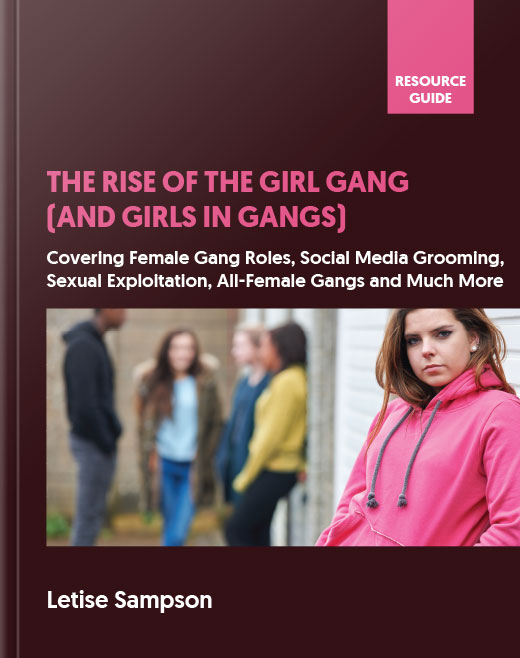


Gang Awareness Staff Training for Schools and Professionals
Alongside pupil sessions, Gang Awareness Staff Training is available for teachers, designated safeguarding leads, pastoral teams, youth workers, social care professionals, local authorities, charities and multi-agency teams.
Gang prevention staff training can focus on:
🔹 Gang recruitment and grooming processes
🔹 Child criminal exploitation and county lines
🔹 Warning signs and professional curiosity
🔹 Missing episodes, unexplained possessions and changes in behaviour
🔹 Social media and online recruitment
🔹 Girls and hidden forms of gang exploitation
🔹 Knife crime, drugs and serious youth violence
🔹 Secondary liability and group offending
🔹 Trauma-informed responses to disclosures
🔹 Safeguarding referrals and multi-agency working
🔹 Supporting safe disengagement and positive alternatives
Training can be delivered as a standalone session or incorporated into a wider Staff Training. Dedicated Gang Awareness Staff Training is also available.
Safeguarding Outcomes from Gang Prevention Workshops
Well-designed Gang Prevention Workshops can strengthen safeguarding by helping young people identify recruitment and exploitation before they become more deeply embedded.
The workshops also create shared language for pupils and staff around grooming, coercion, loyalty, debt, criminal exploitation, online influence and safe disclosure. This can make it easier for young people to describe concerns that they may previously have understood only as friendship, favours or pressure.
The programme is deliberately non-judgmental. A young person may be simultaneously experiencing victimisation, exploitation and offending behaviour. Effective safeguarding requires adults to understand that complexity while still addressing risk and accountability appropriately.
Gang Prevention Workshops by Age Group
Content is adapted by age, maturity, setting and level of risk so that participants receive relevant prevention education without unnecessary or inappropriate detail.
Gang Prevention Workshops for Upper Primary Schools, Years 5 and 6
Upper primary sessions focus on healthy friendship, belonging, pressure, trusted adults, online contact, gifts, secrecy and recognising when somebody is asking a child to do something unsafe.
Aims: early prevention, confidence saying no, recognising manipulation, safe disclosure and preparing for greater independence at secondary school.
Gang Workshops for Secondary Schools, KS3 and KS4
Secondary sessions explore recruitment, status, money, loyalty, social media, county lines, weapon carrying, peer pressure, secondary liability, serious violence and safer ways to seek help.
Aims: recognising exploitation, resisting recruitment, questioning gang glamour, understanding consequences and improving safer decision making.
Gang Awareness Workshops for Sixth Forms, Colleges and Young Adults
Post-16 sessions can explore adult criminal consequences, organised crime, county lines, financial exploitation, nightlife, relationships, online reputation, serious violence and barriers to leaving criminal groups.
Aims: mature risk assessment, exploitation awareness, legal understanding, safer relationships and protecting future education and employment.
Gang Workshops for PRUs, SEMH and Alternative Provision
Sessions can be adapted for smaller groups, different communication styles, pupils with lived experience of violence or exploitation, or young people who may disengage from conventional classroom delivery.
Aims: credible discussion, relationship awareness, recognising control, reducing risk, safe disclosure and identifying realistic positive alternatives.
Benefits of Gang Prevention Workshops for Schools and Colleges
Gang Prevention Workshops strengthen wider safeguarding and personal development by helping young people understand the issue before exploitation or serious violence becomes entrenched.
Helps pupils identify recruitment, manipulation and coercion before a relationship becomes more controlling.
Improves understanding of county lines, criminal exploitation, debt, gifts, loyalty and the transfer of risk onto young people.
Challenges the idea that fear, secrecy and criminal loyalty are evidence of genuine friendship or protection.
Clarifies group offending and secondary liability without repeating misleading ideas about automatic guilt by association.
Gives young people clearer language to explain pressure, threats, debt, grooming or activity they no longer feel able to control.
Can be tailored around local context, year group, county lines concerns, online recruitment, serious violence or targeted safeguarding needs.
How We Deliver Gang Prevention Workshops
Discussion, scenarios, reflection and decision making rather than a lecture that glamorises or sensationalises gang culture.
Participants work through realistic situations involving gifts, money, favours, loyalty, peer pressure and hidden exploitation.
Authentic insight is used carefully to illuminate consequences and manipulation without presenting criminality as exciting or aspirational.
Delivery recognises that some participants may have experienced violence, bereavement, exploitation, family involvement or community trauma.
Sessions are adapted to age group, setting, local context, safeguarding priorities and issues identified by the organisation.
One-hour workshops, extended sessions, half-day programmes, full-day programmes, targeted intervention groups, parent sessions and staff CPD.
Face-to-face delivery across the UK with virtual options for UK and international organisations.
Testimonials: Gang Prevention Workshop Impact
Schools, colleges, charities and youth organisations have used 2020 Dreams gang prevention and knife crime programmes across a wide range of educational and safeguarding settings.
“Thank you all for the Gun & Knife Crime, Gang Prevention and Drugs Awareness workshops that you delivered. The pupils were really engaged and enjoyed the sessions.”
J. Barima, Leader of PSHE & Careers
“The learners all took away something from it and gave them some food for thought. Steve was a great presenter and they all thought he was great.”
N. Boone, Head of Tutorial
“I just wanted to thank you for the Knife and Gang Crime training. It was absolutely fantastic! So much so my team didn’t want him to leave!”
S. Gardner, Action for Children, Northampton
“The facilitator was extremely professional, helpful and informed on the motivating influences for crime within the young people.”
Dr T Johnson, Head of Pupil Referral
Related Gang Prevention, Exploitation and PSHE Workshops
Gang involvement often overlaps with exploitation, knife crime, drugs and personal safety. Build a wider safeguarding programme by combining Gang Prevention Workshops with related 2020 Dreams sessions.
Weapon carrying, protection myths, serious violence, peer pressure and safer choices.
Child criminal exploitation, drug running, debt, coercion, cuckooing and safeguarding.
Drug risks, peer pressure, supply, exploitation and decision making.
Personal safety, environmental awareness, recognising risk and safer decision making.
Status, identity, aggression, peer expectations and positive masculinity.
Social media pressure, online recruitment, harmful content and digital safeguarding.
Gang Prevention Workshops FAQ
Book Gang Prevention Workshops for Your School or Organisation
Ready to bring Gang Prevention Workshops to your school, college, PRU, youth organisation or professional team? Tell us the age group, number of participants, preferred dates, location and any particular gang, exploitation or serious violence concerns you would like the session to address.
We can deliver a standalone Gang Awareness Workshop or build a wider safeguarding programme combining gang prevention with county lines, knife crime, drugs, situational awareness, online safety and other PSHE priorities.
You may also like…
Gang Prevention and Criminal Exploitation References & Evidence Sources
Our Gang Prevention Workshops draw on current safeguarding guidance, government data, prosecution guidance and research into gang involvement, exploitation and serious violence:
- Youth Endowment Fund – Children, Violence and Vulnerability 2025: Exploitation and Gangs – research on gang involvement, exploitation, going missing, weapon carrying, serious violence and routes out.
- Home Office – County Lines Programme Data – updated July 2026 with current figures on line closures, arrests, safeguarding referrals, weapons seizures and children supported.
- Home Office – County Lines Programme Overview – current government overview of county lines, exploitation and programme activity.
- Home Office – Crime and Policing Act 2026: Child Criminal Exploitation Factsheet – explains the new child criminal exploitation offence, prevention orders, cuckooing and internal concealment measures.
- Crown Prosecution Service – Secondary Liability Guidance – explains current prosecution guidance on assistance, encouragement, association, presence and group offending.
- Department for Education – Keeping Children Safe in Education 2026 – statutory safeguarding guidance for schools and colleges, coming into force on 1 September 2026.
- GOV.UK – County Lines: Criminal Exploitation of Children and Vulnerable Adults – government guidance and resources for professionals.
These sources inform our current, trauma-informed and safeguarding-focused approach. Workshop delivery does not replace individual safeguarding procedures, legal advice or specialist intervention where a child is believed to be at immediate risk.